
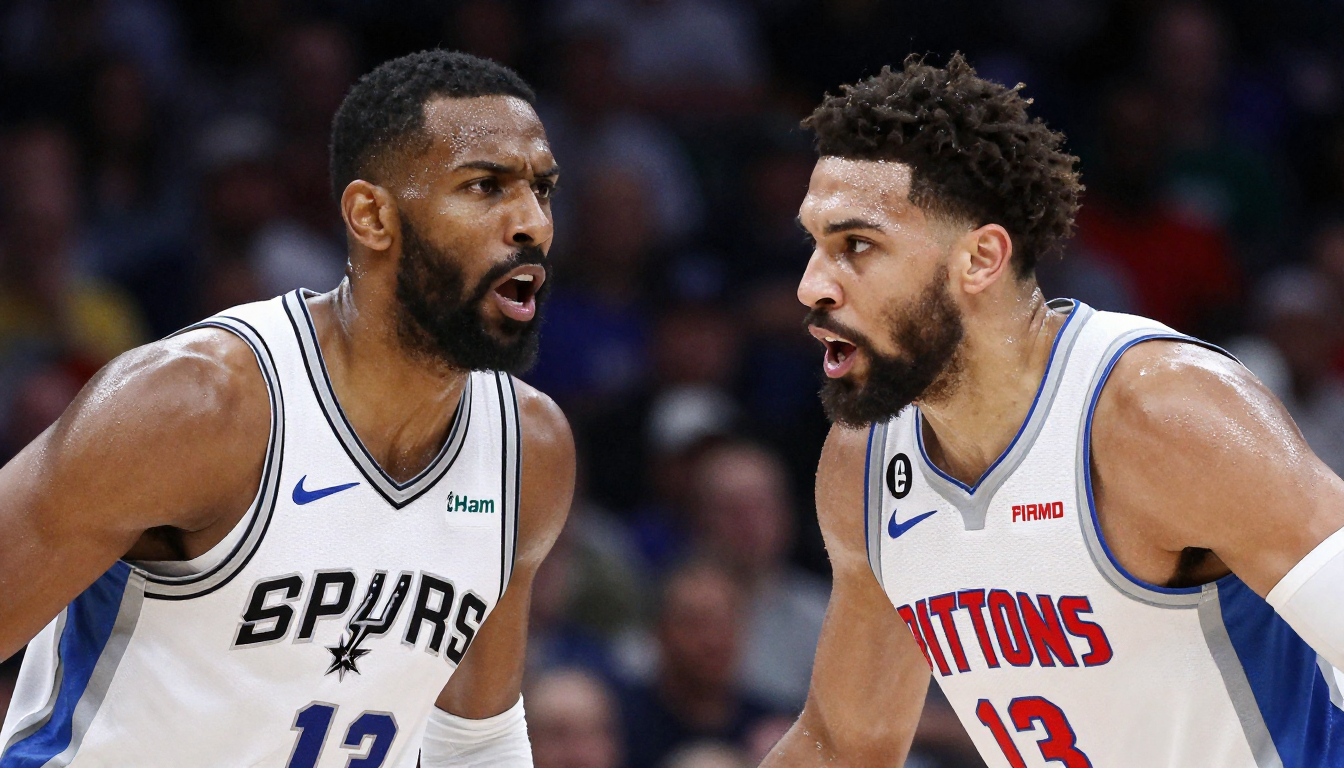

The matchup between the San Antonio Spurs and the Detroit Pistons has long been one of the most compelling interconference rivalries in NBA history. While not a traditional geographic rivalry, the intensity, championship stakes, and contrasting styles of play have made every Spurs vs Pistons game worth watching. From their iconic NBA Finals showdown to their current rebuilding phases, both franchises have shaped the league in unique and powerful ways.
The Legacy of the San Antonio Spurs
The San Antonio Spurs are one of the most successful franchises in NBA history. Founded as part of the ABA in 1967 and joining the NBA in 1976, the Spurs built a dynasty that spanned nearly two decades. Under legendary coach Gregg Popovich, the Spurs won five NBA championships (1999, 2003, 2005, 2007, and 2014).
The team became synonymous with discipline, ball movement, and selfless basketball. Hall of Fame players like Tim Duncan, Tony Parker, and Manu Ginóbili formed the core of a dynasty that consistently contended for titles.
Today, the Spurs are entering a new era led by young superstar Victor Wembanyama. His arrival has reignited excitement in San Antonio and given fans hope for another championship window in the future.
The Rich History of the Detroit Pistons
The Detroit Pistons have their own proud legacy. Founded in 1941 (as the Fort Wayne Pistons) and relocating to Detroit in 1957, the franchise has captured three NBA championships (1989, 1990, and 2004).
The “Bad Boys” era of the late 1980s defined Detroit basketball. Led by Isiah Thomas, Dennis Rodman, and Joe Dumars, the Pistons built a reputation for physical defense and mental toughness.
In 2004, the Pistons shocked the basketball world by defeating the heavily favored Los Angeles Lakers in the NBA Finals. That team, led by Chauncey Billups, Ben Wallace, Richard Hamilton, and Rasheed Wallace, was built on defense, teamwork, and balanced scoring.
The 2005 NBA Finals: Spurs vs Pistons
One of the most unforgettable chapters in Spurs vs Pistons history came during the 2005 NBA Finals. The series between San Antonio and Detroit went to a thrilling seven games, showcasing elite defense and high basketball IQ on both sides.
Game 5 featured one of the most iconic moments in Finals history when Robert Horry hit a clutch three-pointer in overtime to give the Spurs a crucial win. Ultimately, Tim Duncan led San Antonio to a Game 7 victory, earning his third Finals MVP award.
The series was a battle of fundamentals, with neither team relying heavily on flashy plays or superstar isolation scoring. Instead, it was a chess match between Gregg Popovich and Detroit coach Larry Brown. The 2005 Finals solidified the rivalry and remains one of the greatest Finals series in NBA history.
Playing Styles: Defense First Philosophy
When discussing Spurs vs Pistons, defense is always central to the conversation. Historically, both teams have emphasized strong defensive schemes, disciplined rotations, and team-oriented basketball.
The Spurs’ system focused on ball movement, spacing, and high-IQ decision-making. Their offense was built around inside-out play, particularly during the Tim Duncan era.
Meanwhile, the Pistons relied heavily on physical defense and rim protection. Ben Wallace anchored one of the best defensive units in league history. The 2004 Pistons, in particular, demonstrated that a cohesive defensive team could overcome star-studded opponents.
This shared defensive identity made their matchups intense, low-scoring, and highly tactical.
Head-to-Head Record Over the Years
In regular-season matchups, the Spurs and Pistons have had competitive battles across decades. While San Antonio often held the edge during its dynasty years, Detroit has also secured memorable victories, especially during its championship runs.
Because they compete in different conferences (Western vs Eastern), they only meet twice per regular season, which adds intrigue to every matchup. Each game carries the weight of historical significance, even if playoff meetings have been rare outside of the 2005 Finals.
In recent seasons, both teams have been in rebuilding phases, shifting the focus toward developing young talent rather than immediate championship contention.
The New Generation: Rebuilding and Hope
Today’s Spurs vs Pistons games look different from the gritty Finals battles of 2005. Both franchises are investing in youth and development.
For the Spurs, Victor Wembanyama represents a transformational talent. His size, skill set, and defensive presence could redefine the team’s future. The organization’s patient development model remains intact under Gregg Popovich.
The Pistons, meanwhile, are building around young prospects and high draft picks. Detroit’s strategy centers on long-term growth, player development, and restoring the franchise’s defensive identity.
While neither team is currently at the peak of its powers, the foundation for future competitive clashes is being laid.
Coaching Impact on Spurs vs Pistons Games
Coaching has always been a defining element in this matchup. Gregg Popovich’s tactical brilliance turned the Spurs into a model franchise. His adaptability allowed the team to evolve from a post-centric offense to a three-point-heavy, ball-movement system in 2014.
On the Pistons side, coaches like Larry Brown emphasized structure, accountability, and defense. The chess match between coaching staffs often determined outcomes when talent levels were evenly matched.
Even today, the coaching philosophies reflect each franchise’s commitment to disciplined basketball.
Memorable Players in Spurs vs Pistons History
Several players have left a lasting mark on this rivalry:
Tim Duncan’s consistency and leadership defined the Spurs’ success in 2005.
Chauncey Billups’ clutch shooting nearly delivered another championship to Detroit.
Ben Wallace’s defensive dominance made scoring in the paint nearly impossible.
Tony Parker’s speed and penetration tested Detroit’s perimeter defense.
These individual battles elevated the overall intensity of Spurs vs Pistons matchups.
Fan Base and Cultural Impact
Both San Antonio and Detroit are blue-collar cities that embrace hard work and resilience. Their teams reflect these values on the court.
Spurs fans appreciate disciplined, team-oriented basketball without excessive drama. Pistons fans take pride in toughness and defensive grit. This shared mentality makes their games feel authentic and rooted in basketball fundamentals.
Even years after the 2005 Finals, fans from both sides still debate key plays and “what if” scenarios from that epic series.
Spurs vs Pistons in the Modern NBA Landscape
The NBA today is faster, more perimeter-oriented, and analytics-driven. However, the foundational principles that defined Spurs vs Pistons—defense, teamwork, and coaching—remain essential to championship success.
As both teams continue rebuilding, future matchups may once again carry playoff implications. With the Spurs developing a generational talent and the Pistons rebuilding their identity, the rivalry could enter a new chapter.
While it may not dominate headlines every season, Spurs vs Pistons carries historical weight that few interconference matchups can match.
Conclusion
The Spurs vs Pistons rivalry is a story of discipline, defense, and championship pedigree. From the unforgettable 2005 NBA Finals to today’s rebuilding efforts, both franchises have contributed significantly to NBA history. Though they compete in different conferences and meet infrequently, their games often symbolize a purist’s version of basketball—team-first, strategic, and fundamentally sound.
As new stars emerge and both teams shape their futures, the possibility of another high-stakes Spurs vs Pistons clash remains an exciting prospect for basketball fans everywhere.
FAQs
1. When did Spurs vs Pistons meet in the NBA Finals?
The Spurs and Pistons met in the 2005 NBA Finals, where San Antonio won the series in seven games.
2. Who was the MVP of the 2005 Finals between Spurs and Pistons?
Tim Duncan won the Finals MVP award after leading the Spurs to victory.
3. How many championships have the Spurs won?
The San Antonio Spurs have won five NBA championships (1999, 2003, 2005, 2007, 2014).
4. How many championships have the Pistons won?
The Detroit Pistons have won three NBA championships (1989, 1990, 2004).
5. How often do the Spurs and Pistons play each season?
Because they are in opposite conferences, they typically play each other twice during the NBA regular season.